Under the new Viksit Bharat Guarantee for Rozgar & Ajeevika Mission (Gramin), the government has strictly defined the types of physical labor and projects that can be undertaken. Unlike the old MGNREGA which sometimes focused on temporary mud works, the new mandate focuses strictly on creating durable, long-lasting assets that benefit the village economy.
All permissible works are strictly categorized under Four Thematic Domains. If a Gram Panchayat proposes work outside these domains, it will not be approved for funding.
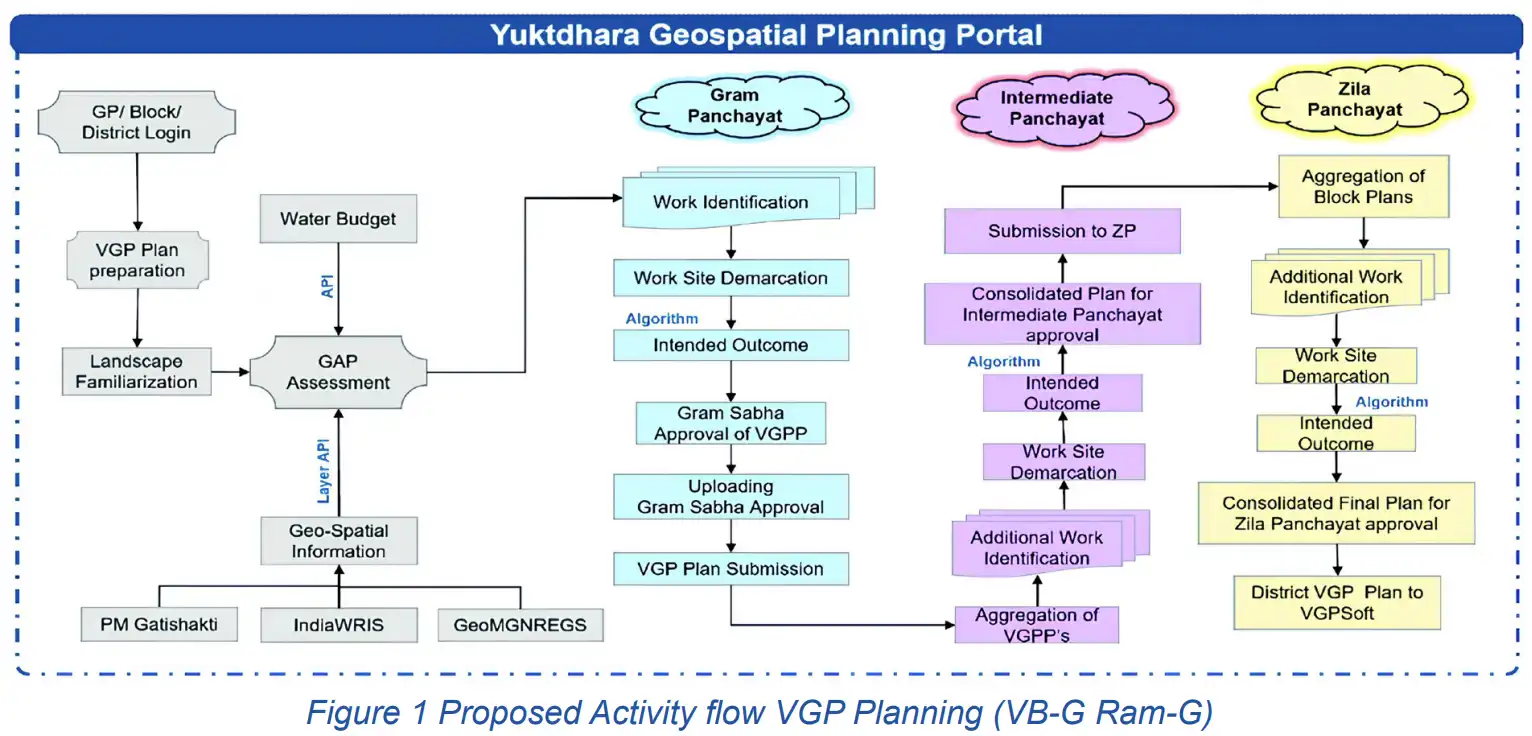
The 4 Thematic Domains of Village Works
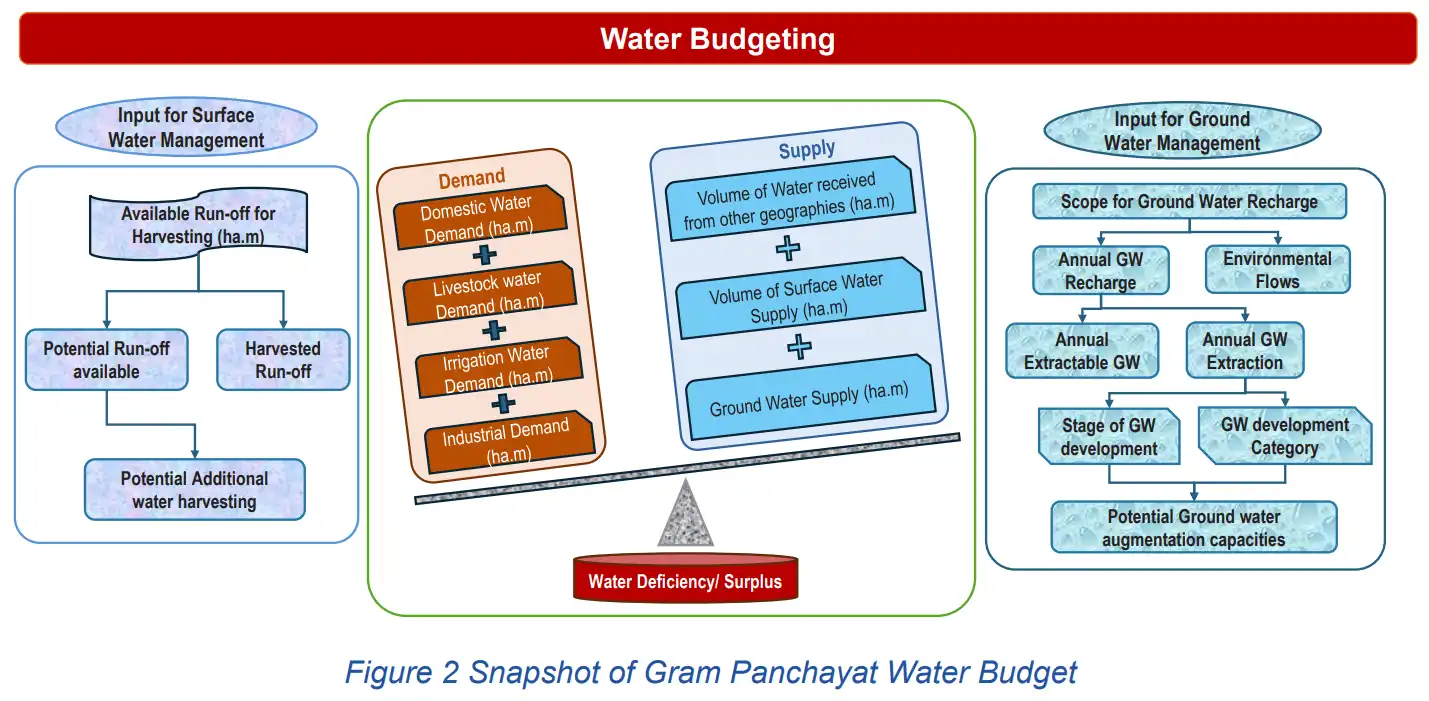
Domain I, Water Security, remains the highest priority for Gram Panchayats. Below is the detailed water budgeting approach and the full list across all domains.
I
Water Security
- Construction of canals, flood or diversion channels, check dams, gully plugs and underground dykes.
- Construction or rejuvenation of ponds, percolation tanks, recharge pits, recharge shafts, injection wells and associated water harvesting structures.
- Irrigation open wells, micro-irrigation channels and field water distribution systems.
- Reclamation of community waterlogged land.
- Afforestation and plantation works linked with soil and moisture conservation.
- Rooftop rainwater harvesting and other decentralised recharge systems.
II
Rural Infrastructure
- Construction or upgradation of rural roads, culverts, cross-drainage structures and village connectivity.
- Construction of Gram Panchayat Bhawans, Anganwadi centres, rural libraries and public buildings.
- School infrastructure: kitchen-sheds, additional classrooms, laboratories, compound walls and playgrounds.
- Crematoria and community infrastructure.
- Solid and liquid waste management assets (stabilising ponds, sanitary complexes, segregation centres).
- Installation of solar lighting and renewable rural energy infrastructure.
- Village parking areas, transport sheds and common rural amenities.
- Rural housing works permissible under PMAY-G.
- Repair and maintenance of works created under the Jal Jeevan Mission.
III
Livelihood
- Construction of training-cum-skill development centres and work sheds.
- Rural haats, weekly markets and other market infrastructure.
- Food grain storage, cold storage units and agri-value chain infrastructure.
- Buildings for Self Help Groups and federation-level institutions.
- Compost structures (vermicompost and NADEP units).
- Development of silvi-pasture grasslands, dairy infrastructure and livestock shelters.
- Fisheries-related infrastructure (e.g., fish drying yards).
- Raising of nurseries and production of building material.
- Integrated projects promoting circular and cyclical economy models.
IV
Disaster Mitigation
- Construction of cyclone shelters, flood shelters and multipurpose disaster resilient structures.
- Construction of diversion channels, embankments and disaster-mitigation works.
- Stabilizing ponds and water structures for flood management.
- Post-disaster rehabilitation, restoration and repair of rural roads and community assets.
- Windbreak and shelterbelt plantations.
- Forest fire management works (fire breaks, fuel buffer zones).